A chipped tooth can suddenly happen and leave you worried about your smile, your comfort, and the health of your teeth. At Luxia Dental in Indianapolis, we can help fix that tooth, protect it from further damage and get you smiling confidently once again.
A chipped tooth means that a piece of the tooth’s outer surface has broken off it could be small or large. This can affect the enamel, the hard outer layer that keeps your teeth strong. Some chipped teeth are just cosmetic and will only make your smile look a bit off, while others can be a bit more serious and expose a sensitive area that’s going to be uncomfortable.
Chipped teeth can occur on the front teeth, the back teeth, or even around the gum line. The chip itself might be smooth, rough, shallow or deep and if it gets too deep into the natural tooth, it could start to cause problems with your bite and eating. Chipped Tooth treatment at Luxia Dental can help determine the right way to repair chipped areas before they become a bigger issue.
A chipped tooth isn’t always an emergency, but it shouldn’t be ignored. Even a small chip can create a rough surface where food and plaque can collect over time, this can increase the risk of decay, a cavity or further damage.
The good news is that many of the treatments are simple and don’t need to be too invasive. Your dentist can examine the whole tooth, check the surrounding teeth, and recommend the right course of action to restore a natural look and feel.
Broken teeth and chipped teeth can happen for loads of reasons. Sometimes it’s a one-time accident, while other times it’s linked to habits, worn-out enamel, or a pre-existing dental issue.
Some common reasons for chipped teeth include:
Cracks and chips can also happen when teeth have already been weakened by dental problems or past dental work. If you’ve got a chipped tooth and it’s also causing you pain, swelling or sensitivity, your dentist may need to have a look deeper to see if the tooth needs more than just a simple repair.
A chipped tooth might look obvious, but not all chips are easy to see. Some patients first notice the change in how their tooth feels when they bite, speak or run their tongue across it.
Some signs include:
Some chipped teeth may not be painful at all. You might just notice your smile looks a bit uneven. In more serious cases, the chip can expose a sensitive part of the tooth and make eating difficult.
Symptoms can come and go – so you may only feel pain when chewing on one side, or drinking something cold. If the pain gets worse, the chip gets bigger or the tooth becomes sensitive, it’s high time to book a dental appointment.
It’s a good idea to see a dentist whenever you notice a chipped tooth, even if it doesn’t hurt. Early dental care can often prevent costly procedures later and help protect your natural tooth.
Give the office a call today if you have:
Severe pain that won't go away
A large piece of tooth that's broken off
Broken teeth after an accident or injury
Bleeding around the tooth or gum line
Swelling in the face, gums or jaw
A tooth that feels loose
Cracks that seem to be extending past the enamel
Sensitivity that makes eating or drinking tricky
A chipped tooth with signs of decay
Trouble chewing or closing your bite normally
Waiting can let bacteria get into a damaged area – which can lead to more decay, infection or a need for root canal therapy. In some cases, a small chip that could have been fixed in one visit might turn into a bigger repair involving crowns, a root canal or tooth replacement.Prompt treatment can likely save the whole tooth and greatly reduce the amount of time you’ll need to spend recovering. In addition to that, it gives your dentist the chance to protect any teeth nearby and make sure your bite feels perfectly comfortable after the procedure.
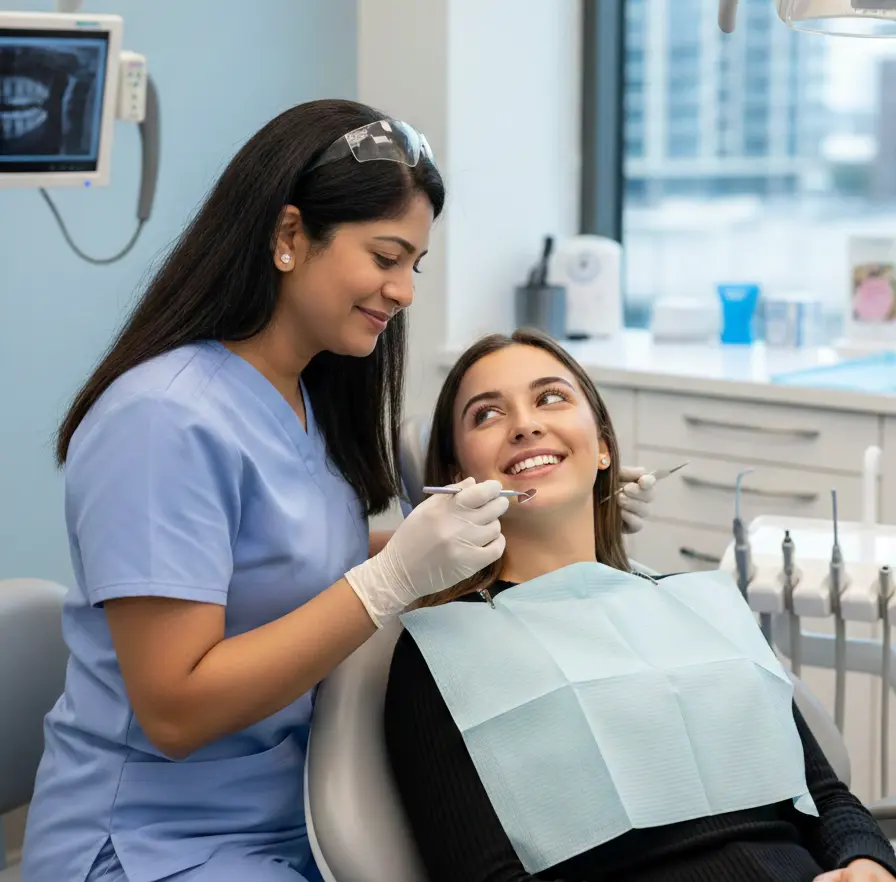
Your initial consultation for chipped tooth treatment in Indianapolis starts with a careful conversation. The team will ask when the chip happened, whether you feel pain, and whether you have noticed changes in chewing, sensitivity, or your bite.
During your visit, the dentist may:
Look closely at the tooth, surrounding enamel, and gum line
Check for cracks, rough edges, gaps, and damaged fillings
Ask you to bite down to see how your teeth meet
Take X-rays when needed to look below the surface
Check whether decay or a cavity is weakening the tooth
Test the tooth for sensitivity or pain
Review your dental health and oral health history
Discuss your goals for repair and your beautiful smile
The exam is usually straightforward and comfortable. Depending on the concern, your appointment may take about 30 to 60 minutes. After the assessment, the dentist will explain what was found and help you determine the right course for treatment.
Treatment options depend on the size and location of the chip, the condition of the natural tooth, and whether there are deeper cracks or decay. Luxia Dental will help you choose a plan that fits your health, comfort, timeline, and smile goals.
Possible in-office treatment options include:
Smoothing and polishing a very small chipped edge
Dental bonding with composite resin
Tooth bonding to rebuild the missing surface
Cosmetic bonding for small chips on front teeth
Tooth-colored fillings for chips connected to a cavity
Veneers, which are thin shells placed over the front of a tooth
Crowns to cover and protect a more damaged tooth
Root canal treatment or root canal therapy if the inside of the tooth is affected
Dental implants for tooth replacement when a tooth cannot be saved
Dental bonding is one of the most popular treatments for minor chipped teeth. During the bonding process, the dentist places composite resin on the damaged area, shapes it to match your tooth, and hardens it with a special light. This procedure often takes one visit and can provide a natural-looking fix without removing much of the tooth.
Tooth bonding is often a great option for chips near the edge of front teeth. Cosmetic bonding can restore the shape of your tooth, close small gaps, and help your smile look balanced again. With proper care, bonding can last for years.
For larger chips or cracked teeth, crowns may be the better choice. Crowns cover the visible part of the tooth and help protect it from breaking again. They may require multiple visits, depending on your treatment plan and the type of crown selected.
Veneers may be recommended when the main concern is the appearance of front teeth. These thin shells can cover chips, uneven edges, stains, and small gaps. Your dentist will explain whether veneers or dental bonding would give you the better result.
If a chip reaches the inner part of the tooth, you may need root canal therapy. A root canal can remove damaged tissue, relieve pain, and help save the natural tooth. After a root canal, a crown is often placed to restore strength and protect the tooth during chewing.
When a tooth is too damaged to restore, dental implants can offer a long-term tooth replacement option. Implants replace the missing tooth root and support a natural-looking replacement tooth. Your dentist will discuss whether implants are right for you and your dental health.
At home, avoid chewing on the damaged side until your appointment. You can rinse gently with warm water, use dental wax to cover a sharp edge if needed, and choose soft foods. Avoid hard foods, sticky candy, and hard objects that could cause further damage.
Luxia Dental provides thoughtful, gentle chipped tooth treatment in Indianapolis for patients who want clear answers and comfortable care. Our team uses modern technology to assess the problem, explain your treatment options in plain English, and create a personalized plan. Whether you need quick dental bonding, a crown, root canal therapy, or help with a dental emergency, we focus on protecting your smile and helping you feel at ease. We also understand that dental visits can feel stressful, so ask our office about comfort options, sedation options, scheduling support, insurance questions, and same-day availability when you need care quickly.
While not every accident can be prevented, a few simple habits can help keep your teeth strong and lower the risk of broken teeth or chipped teeth.
Helpful prevention tips include:
Brush twice a day with a soft toothbrush and fluoride toothpaste
Floss daily to support healthy gums and good oral hygiene
Wear a mouthguard for contact sports or active hobbies
Use a nightguard if you grind or clench your teeth
Avoid biting ice, pens, nails, and other hard objects
Be careful with hard foods such as popcorn kernels and hard candy
Do not use your tooth to open bags, bottles, or packages
Visit your dentist for regular exams and cleanings
Maintain a healthy diet that supports dental care and oral health
Regular checkups can catch small cracks before they become a major issue. Proper care at home and professional dental care at the office can help protect enamel, support healthy gums, and keep your smile looking healthy.
A chipped tooth can be minor or serious depending on how deep it is. A small chip may only affect the surface, while a deeper chip can cause pain, sensitivity, or infection. It is important to have a dentist examine it and determine whether treatment is needed.
Yes. Dental bonding is commonly used to repair chipped teeth, especially on front teeth. The dentist uses composite resin to rebuild the missing part of the tooth and hardens it with a special light. It is a quick, natural-looking option for many patients.
No. Enamel does not grow back, so a chipped tooth will not heal itself. However, small chips can often be repaired easily with smoothing, bonding, or another simple procedure. Getting care early can help avoid further damage.
Not always. A root canal is usually only needed if the damage reaches the inside of the tooth or causes infection. Your dentist will use an exam and X-rays to see whether root canal treatment is necessary.
Many repairs, including dental bonding, can be completed in one visit. Larger repairs, such as crowns or veneers, may require multiple visits. The timeline depends on the condition of the tooth and the treatment you choose.
Do not let a chipped tooth affect your comfort, confidence, or health. Schedule an appointment today with Luxia Dental for chipped tooth treatment in Indianapolis. Our team can examine your tooth, explain the process, and help restore your smile with care that feels right for you.
Call 317-348-0048 look online to visit Luxia Dental.