Many people get at risk when they hear “root canal.” But dental treatment today has evolved to be highly sophisticated, easy, comfortable, and gentle. This article will aid you in understanding the root canal treatment procedure in a simple manner and in a language that even the most novice person can comprehend.
We will go over the latest root canal treatment, painless root canal methods, what transpires during the procedure and the way root canal healing is done. At the end of this article, you’ll know what you can expect during the procedure and the way dentists can make it as safe and easy as possible.

What Is a Root Canal?
Root canals are a dental procedure that can save a damaged or infected tooth.
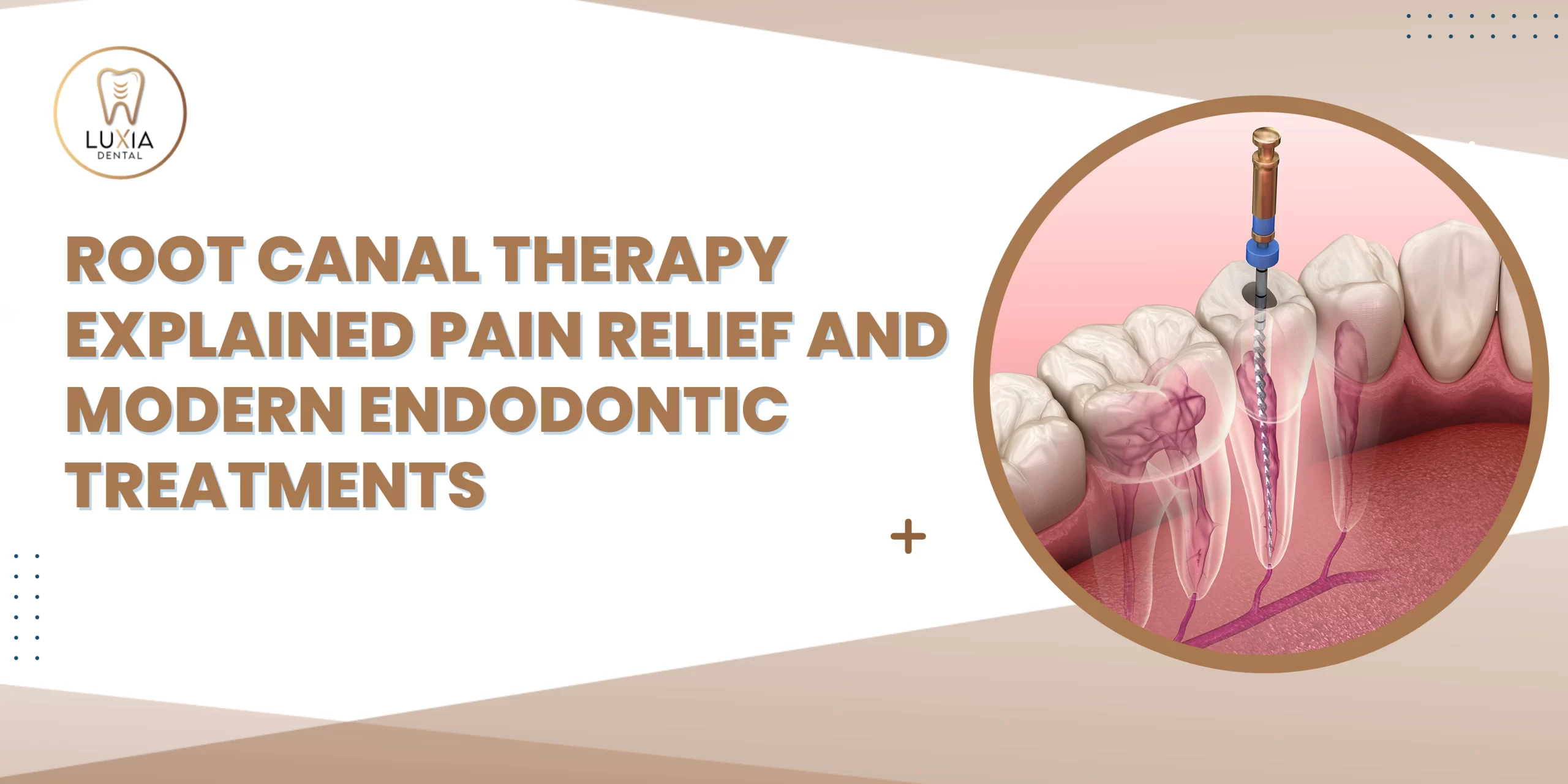
Inside every tooth, there’s the soft tissue known as “pulp.” When this pulp becomes infected due to cracks, deep decay, or injuries, it can cause swelling and pain.
To correct this issue, a dental professional removes the affected pulp, cleans the tooth’s interior, and then seals it. This relieves discomfort and also protects the tooth from infection.
This is the foundation of root canal treatment, explained.
Why Do You Need a Root Canal?
You might require the aid of a root canal when you are suffering from:
- Persistent tooth discomfort
- The gums are swelling
- Sensitivity to cold or hot
- It is painful when chewing
- A broken or cracked tooth
- Deep cavities that connect to the nerves
If left untreated, the infection could spread, causing severe discomfort.
That’s why treating root canal pain is crucial, and prompt intervention can save the tooth.

Modern Root Canal Treatment (Endodontic Treatment 2025)
Dentistry has seen a significant change.
Today, modern root canal treatment uses advanced technology and tools that make the therapy more secure, quicker, more efficient, and nearly non-invasive.
The newest techniques used in the treatment of endodontics 2025 include:
- Digital X-rays
- Instruments that rotate
- Cleaning with lasers
- Treatment with microscopic techniques
- 3D imaging for precision
These modern tools enable dentists to create a delicate root canal that is soft and comfortable for the patient.
Is a Root Canal Painful?
This is the most common problem that people ask.
The good news is that, with today’s dental technology, a comfortable dental root canal is very feasible.
Dentists use strong local anaesthesia, which completely numbs the region. Many patients feel it’s like receiving a routine filling.
Once this procedure is completed, slight discomfort can be managed with medications.
So if you’re concerned about discomfort, rest easy because the root canal relief is swift and efficient.
What to Expect During a Root Canal
If you are aware of what is going to happen, treatment is much more comfortable.
Here is the procedure to be expected during the root canal in easy steps:
1. Examination and X-ray
The dentist examines your tooth and then takes an X-ray to see the issue clearly.
2. Numbing the Area
Local anaesthesia is used to ensure there is no discomfort.
3. Cleaning the Tooth
A small hole is drilled into the tooth, and the infected pulp is removed.
This is the most essential part of the root canal treatment explained.
4. Shaping and Disinfecting
Dental professionals clean and form the canals using the latest tools.
Sometimes lasers can also be used to aid in cleaning.
5. Filling the Canals
These empty channels are lined with a non-toxic material to stop infections.
6. Sealing and Restoring
The tooth is then protected and restored, typically with a crown.
That’s it! It’s that simple! An easy root canal can be completed in a matter of one or two visits.

Root Canal Recovery – What Happens After the Procedure?
The majority of people resume routine activities within a couple of hours.
When you’re healing from a root canal, it’s normal to feel minor soreness for a few days. Avoid eating hard foods on the treated tooth until the crown is inserted.
A few simple tricks for an easy recovery:
- Use prescribed medications
- Follow the instructions of your dentist
- Avoid sticky or hard foods.
- Make sure the area treated is free of dirt
- Follow-up visits are required.
The majority of patients feel better quickly because the infection is eliminated and root canal pain is treated rapidly.
Benefits of Root Canal Treatment
A root canal isn’t solely about relief from pain. It can provide many advantages:
- Saves your natural tooth
- This prevents tooth extraction
- This stops the spread of infection.
- Restores normal chewing
- It is painless and comfortable
- Long-lasting effects
With advancements in root canal treatment, the procedure is more effective and secure than ever.
How Gentle Root Canal Treatments Are Done Today
Dentists today are focusing on patient comfort and experience.
A mild root canal comprises:
- Relaxed environment
- Numbing gels can be used before anaesthesia
- Instruments that are soft tissue-friendly
- Laser cleaning
- Very low vibration
- Shorter appointment time
This technology makes the procedure easier and less painful for each patient.
Signs You Should Not Ignore
If you experience any of the signs below, consult your dental professional as quickly as you can:
- A sudden and unexpected toothache
- The darkening of teeth
- Gums, or pus, can be discharged from the gums.
- The jaw and the ears can be painful.
- Sensitivity that lasts for a long time
The signs often indicate that an infection has reached the tooth pulp, and a root canal may be required for pain relief.
Conclusion
A root canal isn’t something to be feared any longer.
With modern techniques for root canal treatment, advanced tools, and more effective strategies, dentists will ensure you experience a smooth, comfortable treatment. The procedure can help you preserve your tooth’s natural structure, eliminate the infection, and provide lasting relief.
After you’ve had the basics of root canal treatment, you now know what you can expect from the root canal and also how the process of healing functions. If you ever suffer from tooth pain, keep in mind that a soft root canal safeguards your smile from discomfort.
FAQs
1. Are root canals painful?
No. With anaesthesia and the latest tools, it’s like an ordinary dental filling. The majority of people experience a painful dental root canal.
2. How long will the procedure of a root canal last?
Usually, 30 to 60 minutes, based on the dental. Certain cases require two visits.
3. How long is the recovery time?
Root canal recovery is typically quick, up, taking 24 hours or less. Mild soreness is common.
4. Do I require crowns after the root canal?
Yes, many teeth require crowns to keep them sturdy and prevent cracks in the near future.
5. What do I know whether I require an appointment for a root canal?
If you are suffering from severe tooth swelling, pain, or sensitivity, or even an infection, a dentist may suggest advanced root canal treatment to alleviate the discomfort.