If you’ve ever watched someone smile and wondered how they stitched their confidence back together after losing a tooth or two or many, you’re not alone. There’s a kind of quiet courage in rebuilding a smile. And somewhere in that quiet space, late at night, when you’re scrolling through options and comparing the types of dentures you’ve only half heard about, it hits you how intimate this whole thing is. Teeth are not just teeth. They’re memory holders. They’re shape givers.
They’re the invisible scaffolding of how we show ourselves to the world. So when they fall out, or weaken, or disappear, choosing the next step isn’t just a medical decision, it’s a deeply emotional one. That’s why conversations about full dentures vs partial dentures, implant-supported dentures, snap-in dentures, and even permanent dentures feel heavier than expected, and necessary. Because maybe what you want isn’t perfection, but something that feels like you again, or maybe better than you’ve been in years.
And so we begin, slowly, like someone walking toward the bathroom mirror at midnight, trying to see themselves clearly.
Understanding the Types of Dentures
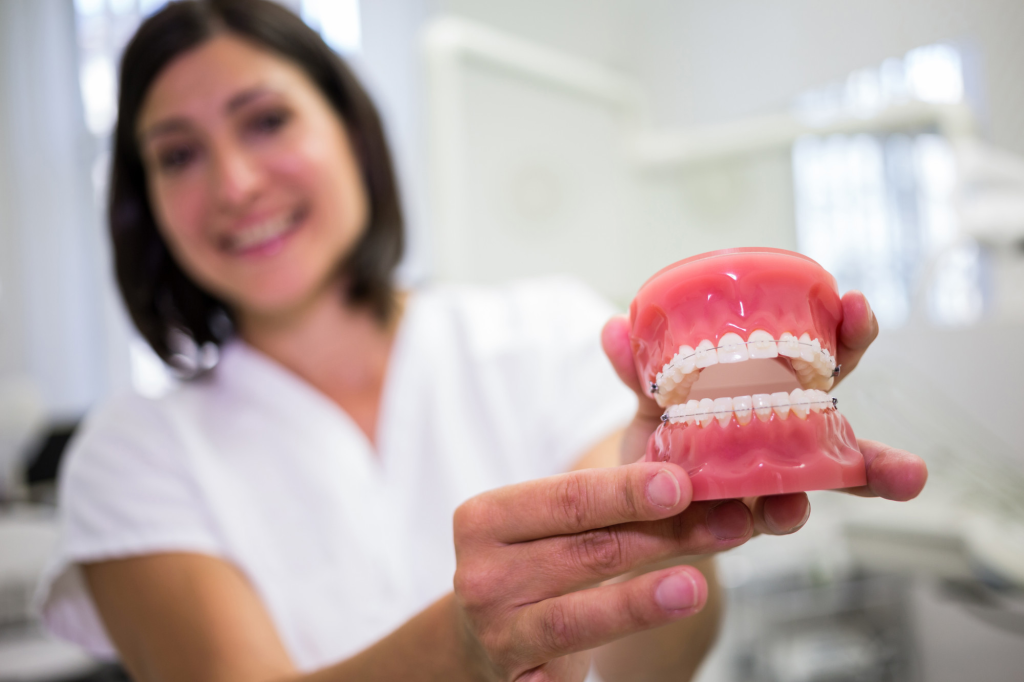
There are so many denture possibilities now that the word “dentures” almost feels outdated. The landscape has changed, expanded, softened. Modern smiles aren’t limited to a single mold, and honestly, thank goodness. The types of dentures available in 2025 feel more like a menu of choices, gentle, custom, surprisingly advanced.
Think of each as a different path: some temporary, some long-term, some anchored into the jaw like they’ve always belonged there. And it’s strange how comforting that idea becomes, that you can choose something that doesn’t just fill a space but restores a feeling, a profile, a freedom to laugh without thinking twice.
Some people start with something simple, removable, just to get used to the idea. Others jump straight to implant-supported dentures or snap-in dentures because they want stability, something that doesn’t wobble or shift with every sip of coffee. Everyone’s journey is different, and that’s what makes all these options so valuable. Choice is power. Especially when you’re rebuilding a part of yourself.
Full Dentures vs Partial Dentures
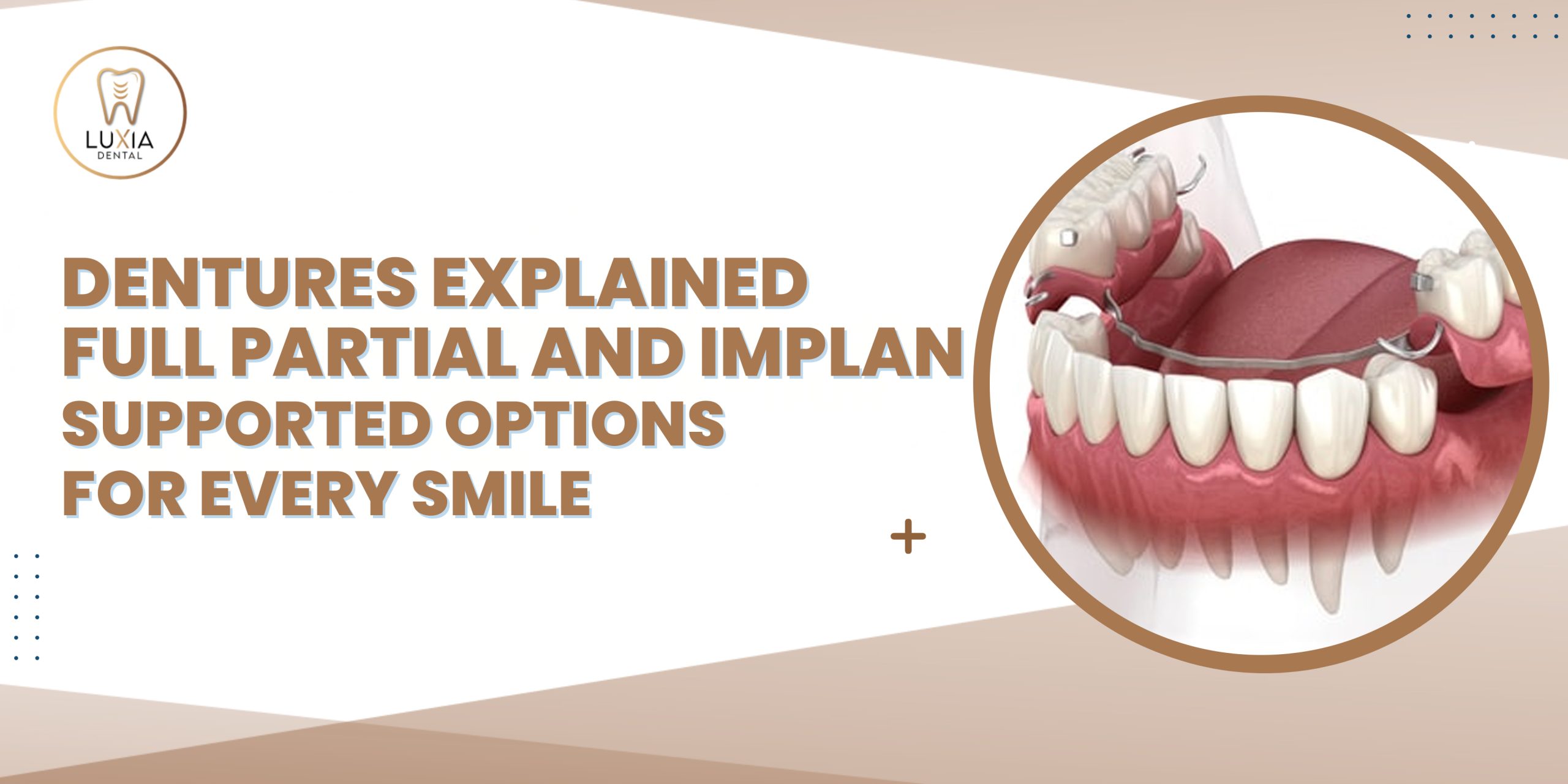
This is usually where the internal tug-of-war begins. Full dentures vs partial dentures, which way to go, what makes more sense, what feels less overwhelming. Full dentures, of course, step in when all natural teeth in a jaw have said their goodbyes. They take over completely, offering a new surface, a new shape, a new start.
There’s a kind of bittersweetness in that, letting go of what once was and embracing something made entirely for you. But there’s also relief. Finally chewing comfortably again. Finally not worrying about an empty arch or a collapsing bite. Full dentures aren’t just replacements, they’re restorations of peace.
Partial dentures, though, come with a different kind of story. They hold space. They fill gaps. They blend into what remains, a collaboration between old and new. And sometimes that feels gentler. More familiar. More yours.
People often choose partials because they want to keep what can be saved, honor the teeth still strong and steady. And there’s beauty in that too. Really, it’s never a competition between the two. It’s a matching exercise, finding what aligns with your life, your mouth, your comfort.
The Rise of Implant-Supported Dentures
If you’ve ever dreamed of dentures that don’t feel like dentures, this is the chapter for you. Implant-supported dentures are anchored into the jaw through small titanium implants, and the truth is, once they heal and settle, they feel shockingly close to natural teeth. That’s why so many people call them the best dentures 2025 has to offer. Because they stay put. Because they don’t slip when you laugh or sneeze. Because you can bite into things you’ve avoided for years.
There’s something grounding about them, something stabilizing, something almost symbolic. They don’t just fill the space, they reconnect you to your own strength. And for many, especially those who’ve struggled with ill-fitting plates, this stability feels like emotional exhale.
And then there are snap-in dentures, almost a cousin to implant-supported ones but with a removable twist. They “snap” onto implant anchors. Secure when you want them to be, removable when you need them to be. A practical middle-path kind of choice, and one many people fall in love with because of its balance.
Denture Options Explained in Real, Human Terms
Sometimes you don’t want a clinical chart or tidy comparison. Sometimes you want someone to just talk. To tell you what it feels like living with these choices day to day. So here’s the real version of denture options explained.
Full dentures give you a clean slate but may take patience. They need gums to adapt, shrink, settle. You might talk funny for a bit, feel awkward biting into a sandwich, wonder if the discomfort is normal. It usually is, and it usually fades.
Partial dentures are lighter, friendlier, faster to accept. But they still need care, cleaning, adjusting like anything worth keeping.
Implant-supported dentures and permanent dentures carry the highest confidence factor. They’re an investment, emotionally and financially, but the payoff is stability and peace. Once they’re in, they feel like they belong.
And snap-in dentures, the flexible ones, the weekend-friendly ones, give you both security and freedom. You snap them on when you want strength, remove them when you want ease.
Every option has a rhythm. And you’ll know when you find the one that matches yours.
Understanding Dentures Cost Without Sugarcoating It
Ah yes, the part everyone thinks about but no one wants to say aloud. Dentures cost. And it varies wildly. Full dentures tend to be more affordable, partial dentures float somewhere in the middle, and implant solutions including implant-supported dentures and permanent dentures sit higher because of surgery, planning, healing.
But here’s the thing. You’re not paying for vanity. You’re paying for chewing, speaking, smiling, belonging to your own face again. Priceless things, even if the world insists on attaching a price tag.
Sometimes the real question isn’t “How much does it cost,” but “What will this give back to my life?” Only you can answer that, honestly, quietly, maybe late at night.
5 Signs You’re Ready to Choose Your Denture Type
- You’ve started avoiding foods not because you dislike them but because your teeth can’t handle them anymore.
- Smiling in photos feels like performance, not expression.
- Your dentist has mentioned bone loss, instability, or extraction more than once.
- You’ve begun researching the types of dentures or browsing best dentures 2025 without noticing you’re already halfway to deciding.
- You’re tired of holding back your laughter and want your freedom back
Conclusion
There’s something tender about rebuilding a smile. Something brave. You’re not just choosing between full dentures vs partial dentures, not just comparing implant-supported dentures with snap-in dentures, not just calculating dentures cost. You’re choosing comfort, identity, confidence. You’re choosing how you want to move through the world in the years ahead. And somewhere inside, even if quietly, you already know which option feels like your future. Trust that instinct. It’s been whispering to you longer than you realize.
FAQs
1. Which types of dentures look the most natural?
Implant-supported dentures and permanent dentures usually look and feel the most natural because they’re anchored securely and designed precisely.
2. Are snap-in dentures good for long-term use?
Yes, snap-in dentures offer long-term stability and flexibility for many people.
3. What affects dentures cost the most?
Implants, materials, customization, and the number of missing teeth impact dentures cost.
4. Do full dentures vs partial dentures differ in comfort?
Full dentures vs partial dentures feel different, but partials often feel easier initially since they work alongside remaining teeth.
5. Are permanent dentures really permanent?
Permanent dentures are long-lasting and fixed, though they may need adjustments over time as your mouth changes.