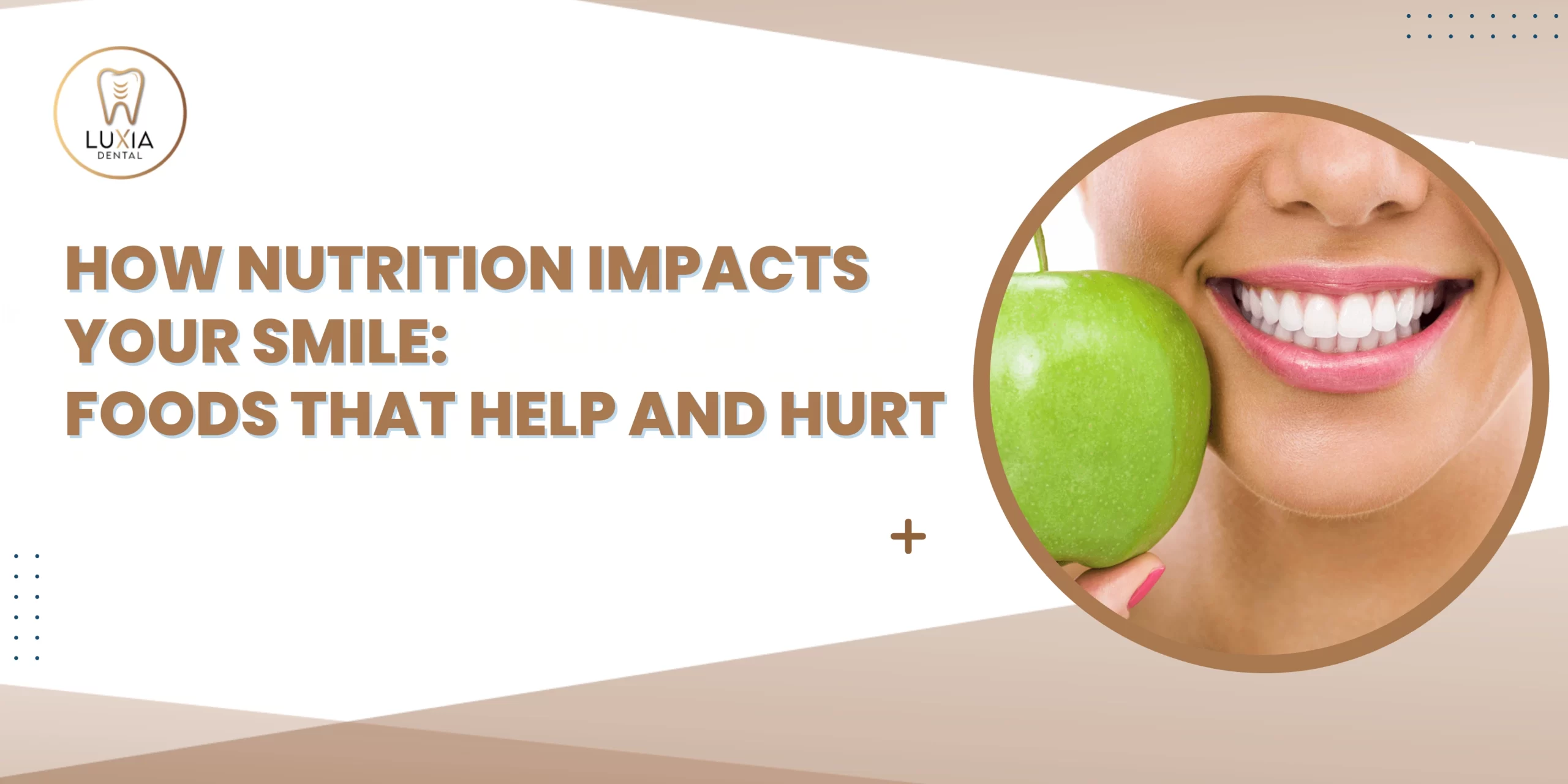
How Nutrition Impacts Your Smile:-
There’s a moment, usually late at night, when you brush your teeth half-asleep, stare at your reflection, and suddenly notice your smile in a way you didn’t during the rush of the day. Not the cosmetic part. The deeper thing. The color. The sensitivity. That tiny ache you’ve been ignoring. And that’s when the question quietly shows up — am I actually feeding my teeth what they need, or just keeping them busy surviving?

The majority of individuals are unaware of how diet affects your smile long before any cavities or discomfort show up. Daily dietary decisions have a subtle effect on teeth, which develops gradually rather than all at once.
We talk about food in terms of weight, energy, skin, mood. Teeth rarely make the list. They’re just… there. Hard. Silent. Until they’re not. Until a sip of cold water stings or a dentist’s mirror finds something you weren’t expecting. That’s when nutrition steps forward, clears its throat, and reminds you it’s been involved all along.
This isn’t a clean, clinical breakdown. It’s more like following the thread of thought that connects what you eat at midnight, what you sip absentmindedly during work, and how your smile feels when you laugh without thinking. Because dental nutrition tips aren’t rules carved in stone. They’re quiet adjustments. Small choices that accumulate. Like plaque does. Like health does too.
The Quiet Relationship Between Food and Teeth
How Nutrition Impacts Your Smile:-
Your teeth don’t ask for much. They don’t crave variety or novelty. They want consistency. Minerals. Time to recover. And most importantly, not to be under constant attack.
When you look closely,it becomes clear that how nutrition impacts your smile isn’t about one perfect diet, but about small habits repeated every day—snacks, drinks, and timing.
Every time you eat, especially carbohydrates and sugars, your mouth becomes a temporary battleground. Bacteria wake up. Acids form. Enamel takes a hit. Then, if given space and the right nutrients, saliva helps restore balance. That rhythm matters. Disrupt it too often, and even the strongest teeth start showing cracks.
This is where diet and dental cavities become deeply intertwined. Cavities aren’t just about sugar. They’re about frequency, texture, timing, and what else is missing from your plate.
Sometimes it’s not the obvious candy bar doing the damage. It’s the constant sipping. The soft foods that stick around. The snacks that never give your teeth a break.
Foods That Quietly Support Your Smile
How Nutrition Impacts Your Smile:-
There are foods that feel like allies. Not flashy superfoods, not trends. Just things that do their job without drama. They strengthen. They rinse. They remineralize. They give your teeth a chance to breathe.
Dentists often see that patients who understand how nutrition impacts your smile tend to have stronger enamel and fewer sensitivity issues, even if their brushing routine is simple.
When people talk about foods for healthy teeth, these are usually what they mean, even if they don’t say it out loud.
Some of these foods work mechanically, others chemically, others emotionally — because eating well tends to slow you down, and slowing down helps everything, including your mouth.
• Dairy products like milk, cheese, and yogurt, especially unsweetened ones, bring calcium and phosphates that help rebuild enamel while also stimulating saliva
• Crunchy vegetables such as carrots, cucumbers, and celery gently scrub tooth surfaces and increase saliva flow
• Leafy greens provide minerals and vitamins that support gum health, which is just as important as enamel
• Nuts and seeds offer healthy fats and minerals without bathing your teeth in sugar
• Plain water, the most underrated hero, rinses acids away and keeps saliva working properly
None of these foods promise perfection. They just tilt the balance in your favor. Quietly. Patiently.
Foods That Quietly Support Your Smile
The reason how nutrition impacts your smile feels invisible is because teeth don’t complain immediately. Damage accumulates silently until it finally shows up as pain or decay.

It’s easy to point at sugar and call it the enemy. And yes, sugar feeds the bacteria that lead to decay. But the real issue isn’t moral. It’s mechanical and behavioral.
Sticky sweets cling. Frequent sweets never let acid levels reset. Liquid sugars coat every surface and slip into places brushing sometimes misses.
This is where diet and dental cavities stop being theoretical and start feeling personal.
A dessert after dinner is different from a candy every hour. A sweet eaten with a meal is different from one eaten alone. Teeth understand patterns better than intentions.
What tends to hurt the most isn’t indulgence. It’s repetition without recovery.
Acidic Foods and the Slow Erosion You Don’t Notice
Instead of blaming one food, it helps to observe how nutrition impacts your smile through patterns—frequent sugar, acidic drinks, and lack of recovery time for enamel.
Acid doesn’t always hurt right away. It’s patient. Citrus fruits, sodas, vinegar-heavy foods, wine — they all soften enamel temporarily. That’s normal. The problem comes when acid exposure stacks up without enough neutral time.
Brushing immediately after acidic foods can actually worsen damage, because enamel is softer in that window. How nutrition impacts your smile this detail rarely makes it into casual conversations, but it matters.
Many dental nutrition tips revolve around timing rather than elimination. Rinse first. Wait. Let saliva do some work before you introduce a toothbrush.
The damage from acid is often silent until sensitivity shows up. And by then, it’s not about fixing — it’s about managing.
Texture Matters More Than You Think
Many people are surprised to learn that how nutrition impacts your smile also affects gums, breath freshness, and overall oral comfort, not just cavities.
Soft foods slide down easily. Comforting. Convenient. But they don’t clean your teeth the way firmer foods do. They linger. They lodge. They give bacteria a longer invitation.
Crunchy foods act like gentle exfoliators for teeth. Not replacements for brushing — nothing replaces brushing — but partners in the process.
This is a subtle but powerful part of foods for healthy teeth that often gets ignored. It’s not just what nutrients are in the food, but how the food behaves once it enters your mouth.
A diet full of soups, mashed foods, refined carbs, and snacks can feel harmless, even wholesome. But without balance, it can quietly increase risk.
Drinks Deserve Their Own Conversation
How nutrition impacts your smile:-
Once you start noticing how nutrition impacts your smile, simple changes like drinking water after meals or spacing snacks feel more meaningful.
What you drink touches your teeth more frequently than what you eat. Coffee, tea, juice, soda, energy drinks — all leave traces. Some stain. Some erode. Some do both.
Sipping is the real culprit here. Constant exposure means constant acid. Even beverages that aren’t sweet can shift oral pH.
Water resets the environment. It doesn’t demand anything from your teeth. It gives back.
When thinking about diet and dental cavities, drinks often do more damage over time than food does, simply because they’re consumed more frequently and held longer.
Emotional Eating and Dental Health
Understanding how nutrition impacts your smile allows you to make flexible choices instead of strict rules, which is why these habits last longer.
This part rarely gets discussed, but it belongs here. Late-night snacking. Stress eating. Eating when tired. Eating when bored.
These moments usually involve softer, sweeter foods. Brushing gets delayed. Sleep follows. Acids linger.
Nutrition isn’t just nutrients. It’s context. It’s mood. And your teeth experience those emotional patterns right alongside the rest of your body.
The most realistic dental nutrition tips acknowledge this instead of pretending discipline is infinite.
Small Shifts That Add Up Over Time
Nobody changes everything at once. Teeth don’t need perfection. They need trends in the right direction.
Spacing snacks. Drinking water after meals. Pairing sweets with meals instead of isolating them. Choosing foods that ask your jaw to work a little.
These shifts don’t feel dramatic. They feel almost boring. But boredom is often where health lives.
The relationship between foods for healthy teeth and daily life isn’t glamorous. It’s repetitive. And repetition, done gently, builds resilience.
Conclusion
Your smile isn’t shaped only by genetics or brushing technique. It’s shaped by what you feed yourself when no one’s watching. By the drinks you sip absentmindedly. By the snacks that keep you company during long days and longer nights.
Nutrition doesn’t shout in dental health. It whispers. It nudges. It accumulates.
Understanding diet and dental cavities isn’t about fear. It’s about awareness. About realizing your mouth is part of your body, not a separate system with separate rules.
And when you start listening — really listening — your smile responds. Slowly. Quietly. Honestly.
FAQs
1. Can healthy eating completely prevent cavities?
No. Cavities are influenced by brushing, genetics, saliva, and oral hygiene too. But good nutrition lowers risk significantly and supports repair.
2. Are fruits bad for teeth because they contain sugar?
Whole fruits, eaten normally, are generally fine. The fiber and chewing involved make a difference. Problems arise with constant snacking or fruit juices.
3. Is cheese really good for teeth or is that a myth.?
It’s real. Cheese helps neutralize acids and provides minerals that support enamel strength.
4. Does drinking water after meals actually help teeth?
Yes. It helps wash away food particles and dilute acids, supporting saliva’s natural protective role.
5. Can changing diet reverse tooth damage?
Nutrition can’t undo cavities, but it can strengthen enamel, reduce sensitivity, and slow further damage when combined with good oral care.