Managing Dental Anxiety: Proven Techniques That Really Work
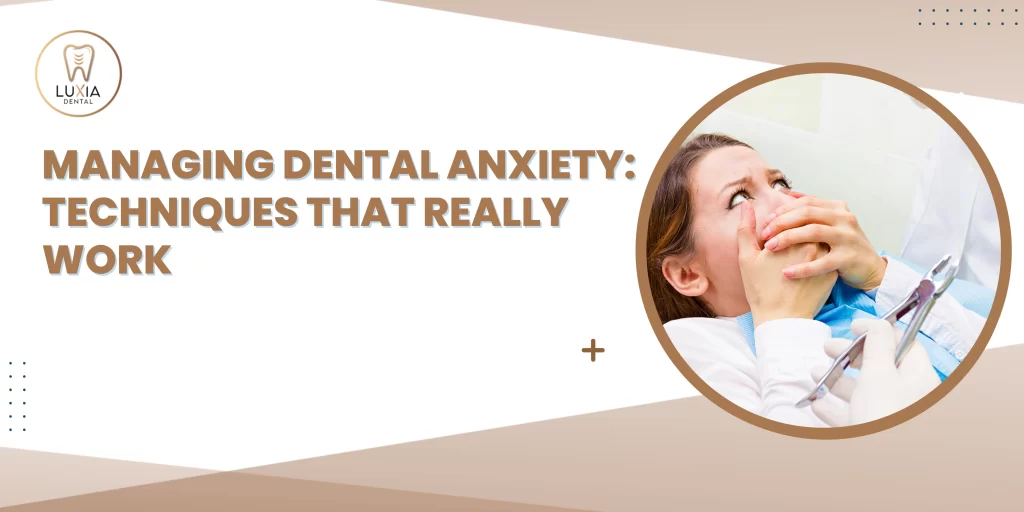
Managing Dental Anxiety:– Dental anxiety doesn’t announce itself politely, which is why managing dental anxiety often feels harder than expected.It shows up as a tight chest the night before an appointment. As a cancelled visit that you promise you’ll reschedule. As a joke you make about hating the dentist, even though the joke feels too close to the truth. Sometimes it shows up as nothing at all until you’re in the chair and your body reacts before your mind can catch up. Late at night, when the world slows and your thoughts stretch out, you might admit it to yourself. That it’s not really about teeth. It’s about control. Vulnerability. Old memories. Sounds and smells that pull you backward without asking permission. People don’t talk enough about how real this fear is. They minimize it. Brush it off. Tell you to be brave. But fear doesn’t disappear because someone says it shouldn’t exist. It softens only when it’s understood. That’s where dental anxiety solutions begin. Not with forcing yourself through appointments, but with gentler approaches that respect your nervous system instead of fighting it. Understanding Where Dental Anxiety Actually Comes From Managing Dental Anxiety:– Dental anxiety isn’t irrational. It’s learned. Conditioned. Often built from a single bad experience that settled deep and stayed there. For some people, it’s childhood memories. For others, it’s a feeling of helplessness — lying back, mouth open, unable to speak. For many, it’s shame. Fear of judgment. Fear of being told they should have done better. Anxiety thrives in silence. It grows when you feel alone in it. Understanding this changes everything. Because it reframes anxiety as a response, not a flaw. And responses can be worked with. The most effective dental anxiety solutions don’t try to erase fear. They make space for it. Choosing the Right Dentist Is Half the Work Managing Dental Anxiety:– This part matters more than any technique. The wrong dentist can undo years of progress in one visit. The right one can help you breathe again. A dentist who understands anxiety moves differently. Speaks differently. Pauses without making you feel difficult. Look for cues. Do they explain before touching? Do they check in mid-procedure? Do they respect boundaries without ego? A calm environment isn’t accidental. It’s intentional. This is the foundation of all calm dental visit tips — safety first, tools second. Communication That Actually Calms the Body Anxiety worsens when you don’t know what’s happening. Silence invites imagination, and imagination is rarely kind in a dental chair. Talking through procedures helps anchor you. Knowing how long something will take helps your nervous system plan. Having a signal to pause gives you back control. These things sound small, but they’re not. They turn a passive experience into a collaborative one. Some simple communication-based supports include: • Agreeing on a hand signal to stop at any point• Asking for explanations before each step• Setting expectations about sensations, not just outcomes• Letting the dentist know your specific triggers These are not demands. They’re dental anxiety solutions/managing dental anxiety rooted in respect. Breathing Isn’t a Cliché, It’s a Tool Breathing changes chemistry and chemistry and plays an important role in managing dental anxiety during dental visit. It slows heart rate. It tells your brain you’re not in danger, even if part of you insists otherwise. Shallow breathing feeds panic. Slow breathing interrupts it. You don’t need complicated techniques. Just intention. Inhale through the nose. Longer exhale through the mouth. Count if it helps. Don’t if it doesn’t. Some people sync breathing with background music. Others focus on a fixed point on the ceiling. Some repeat phrases quietly in their head. These aren’t tricks. They’re Managing Dental Anxiety that meet your body where it is. Distraction as a Legitimate Strategy Distraction isn’t avoidance. It’s redirection. And the brain can only focus fully on one thing at a time. Music. Podcasts. Audiobooks. Guided meditations. Even watching something on a screen if the clinic allows it. Distraction creates a parallel experience that keeps your mind from spiraling. The goal isn’t to forget you’re at the dentist. It’s to prevent your fear from narrating the entire visit. This approach works especially well for people whose anxiety is rooted in anticipation rather than pain. It’s one of the most underrated dental anxiety solutions/managing dental anxiety because it feels too simple to be effective. But it is. Sedation Isn’t Failure, It’s Support There’s a lot of quiet shame around sedation. As if needing help means you’re weak. It doesn’t. Sedation dentistry exists because anxiety is real and persistent for many people. It’s not an escape. It’s a bridge. Options range from mild oral sedatives to deeper forms of sedation, depending on need and procedure. Some keep you relaxed but awake. Others blur the experience so time passes differently. What matters is choice. Consent. Understanding. For some people, sedation dentistry/managing dental anxiety is what finally allows them to receive care without trauma. That matters more than outdated ideas of toughness. Gradual Exposure, Done Kindly You don’t have to do everything at once. In fact, trying to often backfires. Short visits help. Consultations without treatment. Sitting in the chair without tools. Building familiarity slowly. Your nervous system learns through repetition, not logic. Each neutral or positive experience rewrites memory. Slowly. Quietly. This approach works especially well when paired with a dentist who understands pacing. It’s one of the more patient dental anxiety solutions, and one of the most lasting. The Role of Trust in Healing Anxiety Anxiety dissolves in trust. Not immediately. Not magically. But steadily. Trust grows when you’re believed. When your fear isn’t minimized. When your boundaries are respected. A trusting relationship with your dentist changes how your body reacts before your mind even notices. This is why switching dentists can be life-changing for anxious patients. The best calm dental visit tips assume that trust isn’t automatic. It’s built. When Anxiety Has Deep Roots Sometimes dental anxiety isn’t just about dentistry. It’s tied to broader anxiety, trauma, or
7 Latest Advances in Cavity Detection Technology
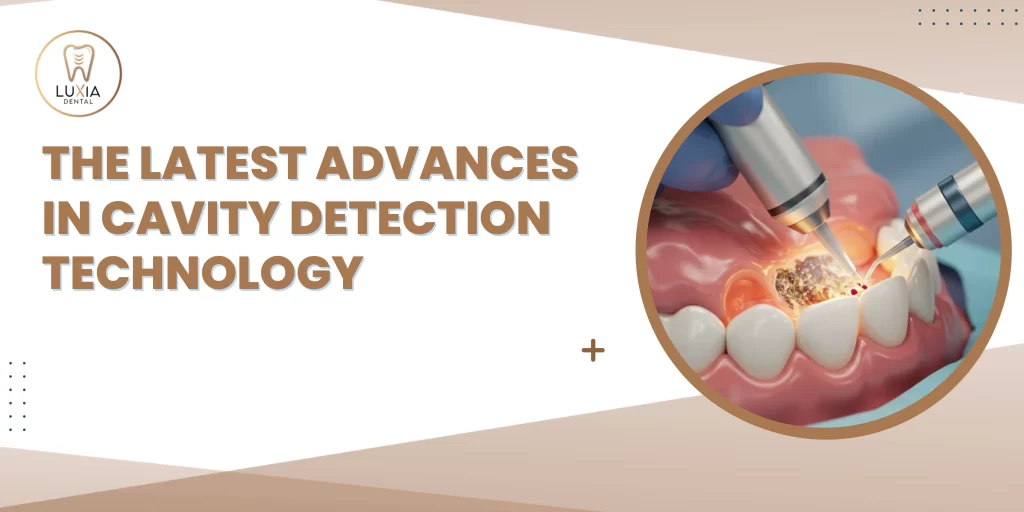
Cavity Detection Technology:- There’s something strangely intimate about sitting in a dental chair. The lights are too bright. The room smells faintly sterile. Someone asks you to open wider, and for a few quiet minutes, your mouth becomes a landscape being explored. In those moments, you realize how much trust you place in tiny tools, trained eyes, and the hope that if something is wrong, it will be caught early. Before it hurts. Before it becomes a story you didn’t want. Cavities rarely arrive dramatically. They whisper. They hide. They take their time. And for decades, dentists have relied on experience, sharp probes, and X-rays to find them. Effective, yes. But imperfect. Because not everything shows up clearly when it’s just beginning. And beginnings matter. This is where Cavity Detection Technology quietly steps in, not with loud promises, but with precision. With patience. With a kind of listening that older tools couldn’t quite manage. The shift isn’t just technological. It’s emotional. It’s about catching decay before it feels like betrayal. Late at night, when you think about health differently, more softly, more honestly, you realize how much relief there is in early knowing. In prevention that doesn’t require pain first. That’s the real story here. Why Early Detection Changes Everything Cavity Detection Technology:- A cavity caught early isn’t really a cavity yet. It’s a warning. A softened spot. A place where minerals are thinning, not gone. That distinction matters more than most people realize. Traditional methods often found decay once it crossed a visible threshold. Once drilling felt inevitable. But early cavity diagnosis shifts the entire narrative. It turns dentistry from repair into guidance. From intervention into conversation. When decay is identified at the earliest stage, remineralization becomes possible. Monitoring becomes an option. Fear loosens its grip. And suddenly, dental visits feel less like judgment and more like collaboration. That emotional shift is subtle, but powerful. And it’s driven by tools that can see what eyes alone cannot. Digital Eyes Replacing Guesswork Dentistry, like many medical fields, is moving from analog intuition to digital clarity. Not because intuition failed, but because it deserves better support. Digital dental tools don’t replace dentists. They extend them. They offer confirmation, context, and sometimes contradiction — which is a good thing in medicine. High-resolution intraoral cameras now allow both dentist and patient to see the same image in real time. No more vague explanations. No more blind trust. Just shared visibility. Seeing a suspicious shadow magnified on a screen changes how information lands. It becomes real, but not scary. Known, not guessed. This transparency is one of the quiet revolutions of modern Cavity Detection Technology Laser Fluorescence and the Language of Light Some of the most fascinating advances involve light itself. Laser fluorescence devices scan tooth surfaces and measure how they react. Healthy enamel reflects light differently than demineralized areas. The idea feels almost poetic. Teeth revealing their health through light response. Decay announcing itself not through pain, but through subtle signals. These tools don’t just say yes or no. They provide readings. Gradients. Degrees of concern. Used thoughtfully, they support early cavity diagnosis/cavity detection technology by highlighting areas that deserve attention, even if they don’t yet require action. They encourage watching instead of rushing. And in healthcare, patience is often underrated. AI Is Quietly Joining the Dental Chair Cavity Detection Technology:- Artificial intelligence sounds intimidating until you realize what it’s actually doing. It’s not deciding your treatment. It’s scanning images. Spotting patterns. Flagging areas that might otherwise be overlooked. AI-assisted radiograph analysis can identify early enamel changes, overlapping shadows, or subtle density differences that the human eye might miss on a busy day. This doesn’t remove human judgment. It sharpens it. In this sense, digital dental tools act like a second set of eyes that never get tired. Never rush. Never assume. And when combined with a dentist who listens, explains, and contextualizes, the result feels less clinical and more caring. Electrical Conductance and Moisture Mapping Cavity Detection Technology:- Another lesser-known method measures how electricity moves through tooth structure. Healthy enamel resists electrical flow. Demineralized enamel allows it more easily. It’s strange to think of teeth in terms of conductivity, but it works. And it’s especially useful for detecting decay between teeth or beneath the surface. These readings don’t scream. They suggest. They add data to the story your mouth is already telling. This is the beauty of modern Cavity Detection Technology. It’s layered. No single tool claims certainty. They collaborate. Just like good clinicians do. What These Technologies Change for Patients The biggest shift isn’t technical. It’s emotional. Patients are no longer passive recipients of news. They’re participants in understanding their oral health. Seeing images. Tracking changes. Making informed choices. This shared awareness reduces anxiety. It builds trust. It reframes dental visits as proactive rather than reactive. Some subtle but meaningful outcomes include: • Fewer surprise fillings because decay is caught earlier• More opportunities for non-invasive treatments• Better understanding of personal risk factors• Increased motivation to improve daily habits All of this flows naturally from early cavity diagnosis/cavity detection technology. when done with care and communication. When Technology Needs Human Restraint Not every advanced tool should be used aggressively. More data doesn’t always mean more drilling. And good dentists understand this. Technology should guide decisions, not dictate them. A reading is a clue, not a verdict. Context matters. History matters. Symptoms matter. This is where experience and empathy remain irreplaceable. The best use of digital dental tools happens when technology slows dentistry down instead of speeding it up. When it creates space for discussion rather than urgency. That balance is delicate. And when it’s right, it feels right. Accessibility and the Slow Trickling In Not every clinic has access to the latest tools. Cost, training, and infrastructure all play roles. Innovation doesn’t arrive everywhere at once. But the trend is clear. What was once specialized becomes standard. What was once expensive becomes expected. As cavity detection tech becomes more accessible, the